Select the right supply paths
Select critical products or raw materials and clarify which upstream suppliers to examine.
SUPPLY CHAIN TRANSPARENCY
We help you identify dependencies beyond your direct suppliers. This approach is known as N-tier risk management. Together, we examine selected supply chains and use the findings to support your risk management.
Where do critical components and raw materials come from? Do several suppliers depend on the same upstream supplier? We focus on areas where greater transparency supports a specific decision.
THE STARTING POINT
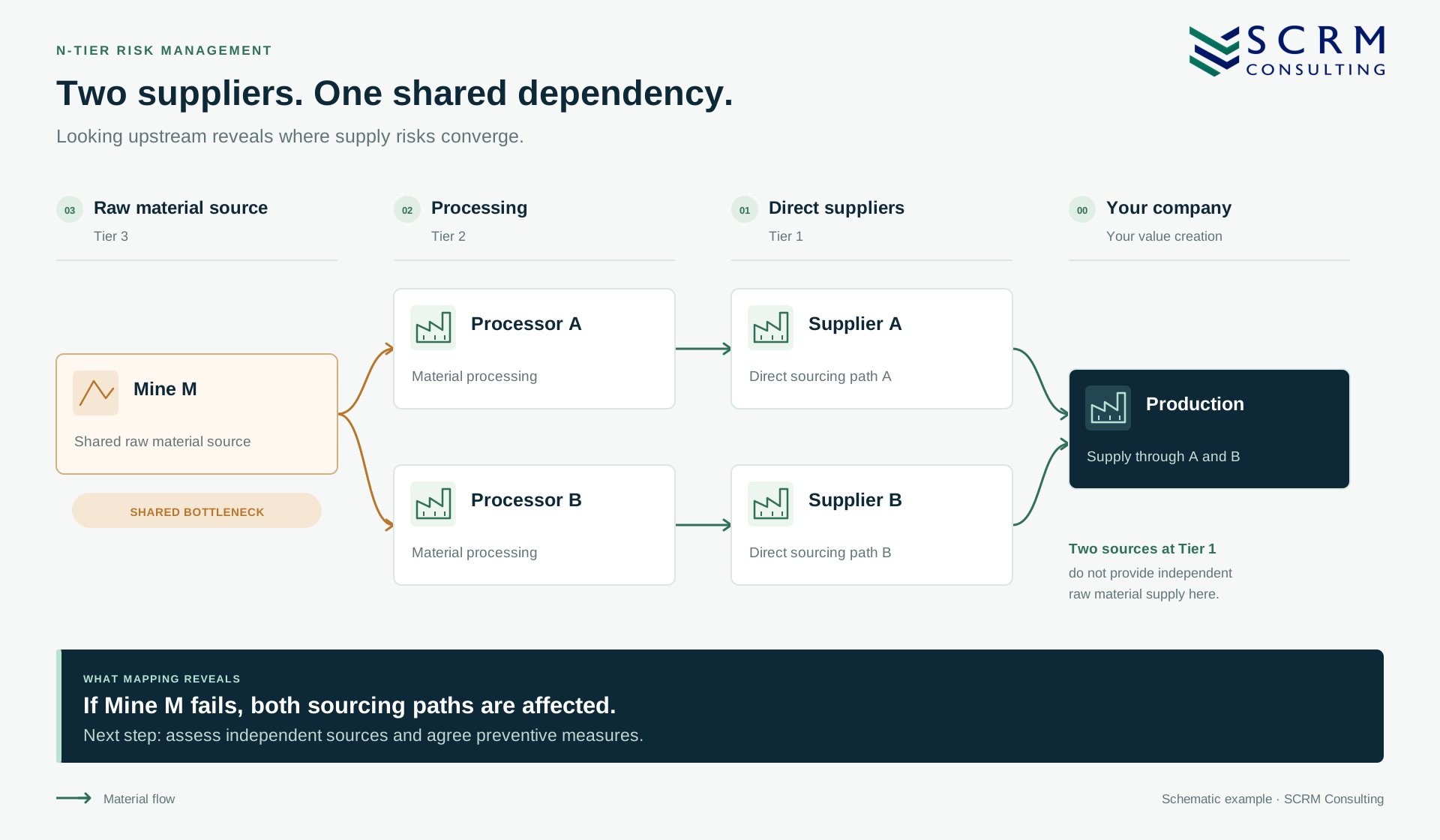
A SUPPLY CHAIN EXAMPLE
Two direct suppliers may depend on the same raw material source. Mapping shows where their supply paths converge and where preventive measures should be focused.
OUR SUPPORT
Select critical products or raw materials and clarify which upstream suppliers to examine.
Combine data from tools, internal sources and supplier discussions, and verify important relationships.
Include important sites and dependencies in your risk monitoring and discuss potential actions.
Agree responsibilities, triggers for updates and how to handle remaining data gaps.
HOW WE WORK
Define goals and determine which supply chain tiers are relevant.
Bring together existing data, software and information from your suppliers.
Keep information current and feed findings into your risk monitoring.
YOUR OUTCOME
We align deliverables with your goals and the agreed project scope.
A justified selection of supply paths with a clear decision-making purpose.
Known and suspected relationships, with sources, dates and open questions.
Agreed steps for research, supplier enquiries, verification and updates.
Defined handovers to monitoring teams, procurement and action owners.
HOW WE SUPPORT YOU
The starting point may be a high-revenue product, a material that is difficult to substitute or a concentration in certain regions. We define which supply path to investigate, how far upstream transparency is needed and which decision the investigation should support.
Software and research provide indications of possible supplier relationships. We cross-check these with information from your suppliers and business teams. We record which relationships are confirmed, how current the information is and where gaps remain. This helps you judge the evidence available for a decision.
Supplier relationships can change. We therefore define who reviews new information, when records are updated and how findings feed into your risk monitoring. We also clarify who is informed when a critical development occurs and who decides on the next steps.
FREQUENTLY ASKED QUESTIONS
No. We start with selected products, materials or supply paths. What matters is which additional information helps you make a sourcing or risk decision.
A critical product or material and its direct suppliers are a good starting point. We review the information already available and how further relationships can be clarified with your suppliers. The depth achievable depends on the data and the cooperation of those involved.
YOUR NEXT STEP
A critical product or material is enough to get started. Together, we clarify which supply paths to investigate and which decision the additional transparency should support.